
David Acquah
November 21, 2025
How AI Is Redefining the Role of the Graphic Designer
From Execution to Direction
In earlier years, the value of a designer was closely tied to their technical skill: how efficiently they could manipulate software, render visuals, and execute client briefs. With AI, that paradigm is rapidly evolving. Generative design tools can now produce multiple visual concepts in seconds, automating the repetitive and mechanical aspects of the creative process.
This shift allows designers to devote their energy to conceptual thinking, curation, and storytelling. Instead of focusing solely on visual execution, they now orchestrate creative decisions, setting the tone, shaping the message, and refining what AI produces. A tool like Midjourney doesn’t replace the designer’s imagination; it interprets it. The designer becomes a director of possibilities, using prompts, context, and critique to steer the algorithm toward meaningful visual expression.
What remains uniquely human and irreplaceable, is the ability to translate brand identity, emotion, and purpose into a visual narrative. Figma AI, which assists with interface layouts and component design, can suggest functional structures. Still, it is the designer’s insight into user experience, psychology, and aesthetics that transforms a layout into an engaging human experience.
Collaboration as the New Creative Model
AI is redefining collaboration in the creative process. The most effective designers today treat AI as a co-creator, not a competitor. They understand how to articulate ideas through precise prompts, evaluate algorithmic interpretations, and iteratively refine outcomes.
Platforms such as Envato and Nano Banana AI illustrate this new relationship vividly. Designers can generate multiple stylistic directions, explore rapid prototyping, and adapt visuals for different markets all while maintaining creative oversight. AI handles the speed and scale; humans provide the sensitivity, strategy, and storytelling that give work its substance.
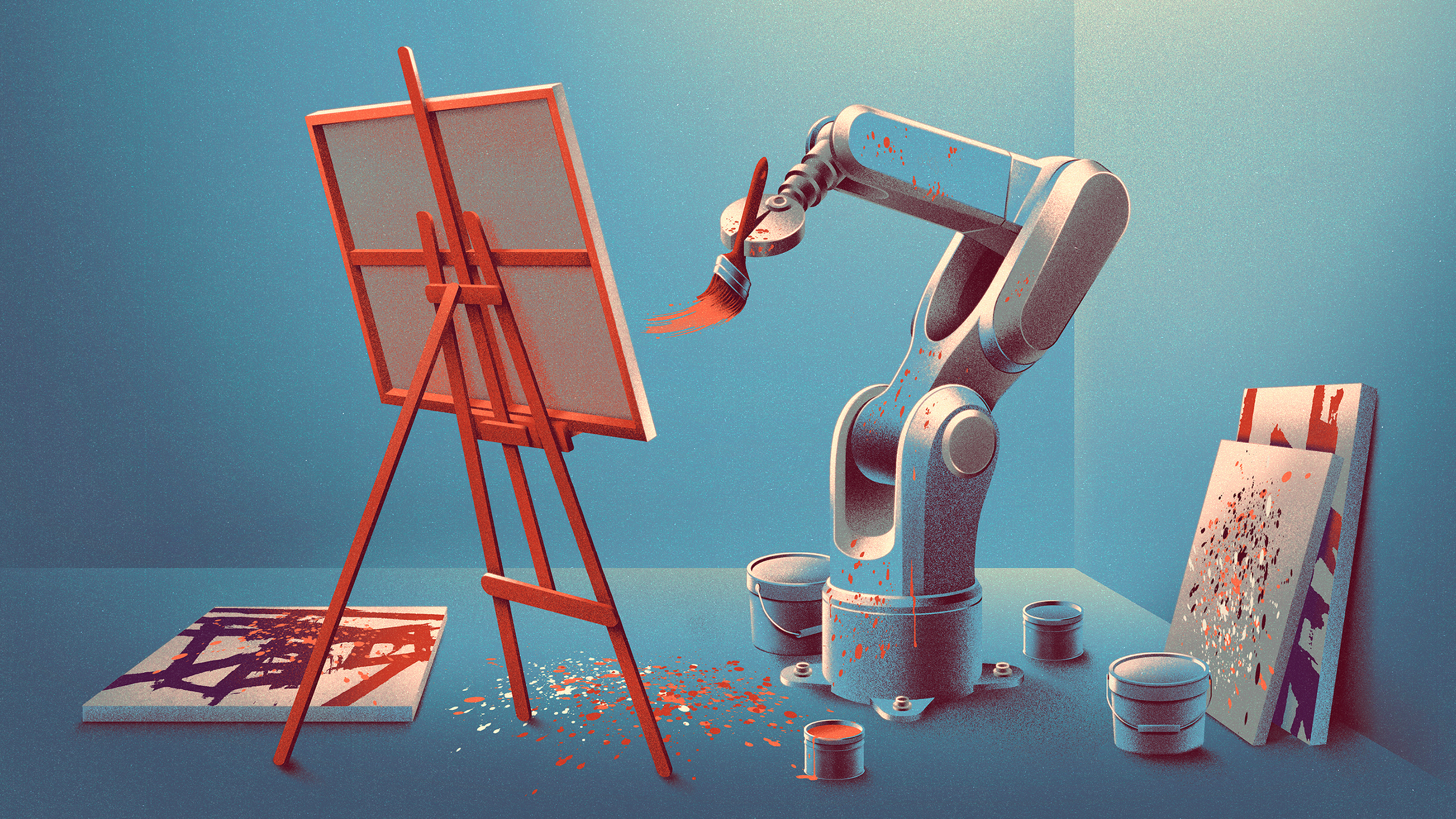
Image from Quanta Magazine
Perhaps the most significant impact of AI lies in how it challenges our understanding of creativity itself. Creativity is no longer confined to manual craftsmanship; it now encompasses the ability to conceptualize, direct, and interpret. The designer’s expertise is expressed not only in the final product but in the decisions that shape the process, the capacity to discern which ideas resonate and which do not.
In this environment, imagination becomes the most valuable skill. Junior designers can achieve higher-quality results quickly, while small studios gain access to creative capabilities once reserved for larger agencies. The democratization of design is underway, and AI is at its core.
Striking the Balance Between Automation and Artistry
The promise of AI must be balanced with a commitment to authenticity. Overreliance on algorithms risks producing work that feels generic or detached from human experience. The most successful designers will be those who integrate technology with intuition, using AI to enhance rather than overshadow their creative judgment.
As many creative leaders now observe, AI can generate countless options, but it still takes a designer to choose the one that feels true. That discernment, the intersection of logic and emotion, remains the foundation of great design.
The Studio of the Future
The design studio of the near future will be a hybrid space where human and machine intelligence coexist seamlessly. Designers will brief AI systems as they would photographers or illustrators, collaborating through language and intent. Skills such as storytelling, cultural literacy, and conceptual thinking will become more valuable than software proficiency alone.
AI is not replacing the designer; it is redefining design practice. It elevates the profession from one of execution to one of creative leadership. The next generation of designers won’t just create visuals. They’ll shape meaning itself, directing technology to amplify imagination instead of letting it dictate the creative process.
Written By:
David Malik Acquah
